Eyelash Lift Balwyn: Hydration or Korean Lash Lift?
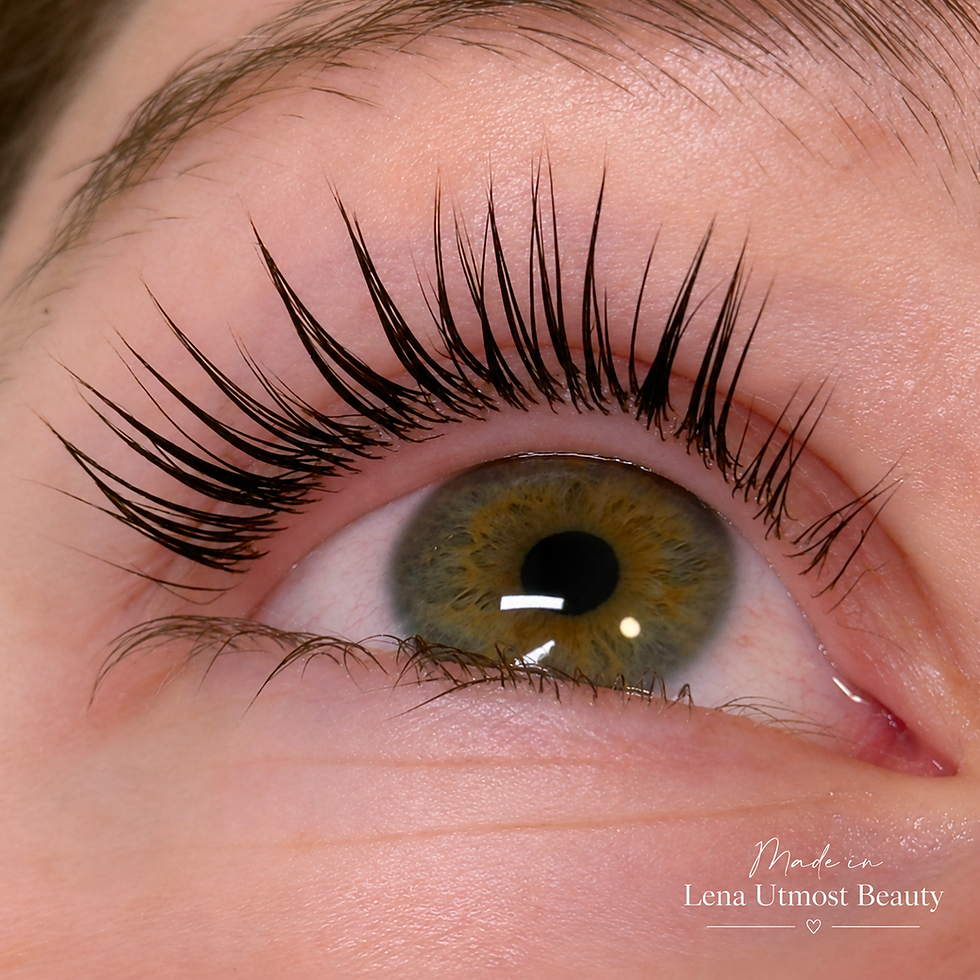
One question has been coming up increasingly often during lash-lift appointments at Lena Utmost Beauty in Balwyn. “What is the difference between a Hydration Lash Lift and a Korean Lash Lift?” Sometimes clients have seen Korean lash lifts on Instagram or TikTok. Others have previously booked our Hydration Lash Lift and want to know whether the Korean version is newer, gentler or somehow better. It sounds like a simple comparison. It is not quite that simple. The terms describe different aspects of lash lifting, and even within the professional beauty industry, “Korean Lash Lift” does not refer to one universally standardised product or protocol. Before deciding which treatment to book, it helps to understand what is actually happening to the natural lashes.
What Actually Happens During a Lash Lift?
Natural eyelashes consist predominantly of keratin proteins. Their shape is partly maintained by chemical bonds within that keratin structure. During a lash lift, the first chemical stage uses a reducing agent to disrupt some of these bonds, allowing the natural lashes to become sufficiently pliable to be repositioned. A second stage then helps reform the bonds while the lashes are held in their new shape. Two reducing chemistries frequently discussed in professional lash lifting are thioglycolate and cysteamine. Both ultimately allow the lash to be reshaped, although their formulation, pH, processing characteristics and application protocols can differ. This chemistry matters when comparing treatments, but it is only part of the story.
What Do We Mean by a Hydration Lash Lift?
At Lena Utmost Beauty, when we refer to our Hydration Lash Lift, we are referring to our established lash-lifting service with an emphasis on lifting the natural lashes while incorporating conditioning and hydration into the treatment protocol. The word hydration should not be misunderstood as meaning that the lifting chemistry itself simply moisturises the eyelashes. A lash lift still requires chemical restructuring of the natural lash. Conditioning ingredients and post-treatment products can be incorporated into professional systems, but the reducing agent itself performs a chemical function rather than “feeding” or hydrating the lash. This distinction is important because terms such as hydrating, keratin and nourishing are sometimes used rather loosely in lash-lift marketing.
So What Is a Korean Lash Lift?
The Korean Lash Lift is better understood as a technique or family of techniques, rather than one particular chemical product. Contemporary Korean-style methods tend to place considerable emphasis on controlling the lashes from the root, customising their direction and adapting the shaping process to the client's natural lash growth and eye anatomy. Some approaches use very little conventional adhesive, while others use balms or specially prepared formulations to control the lashes during processing. Many modern Korean-style systems use cysteamine-based formulations, which is one reason the terms “Korean” and “cysteamine” are frequently used together. But they are not synonyms. Professional guidance notes that Korean techniques can also be performed with other appropriately selected systems. In fact, accounts of the technique's development indicate that thioglycolate-based products were also used in Korean practice. So asking whether a treatment is “Korean” does not, by itself, tell you exactly which chemical formulation is being used.
Is Cysteamine Gentler?
This is where another common claim needs some qualification. Cysteamine-based systems are often described as a gentler alternative to traditional thioglycolate-based systems. Cysteamine can be formulated at a lower pH and generally reduces disulphide bonds more gradually, potentially giving the technician a different processing window and greater control. But that does not mean cysteamine is automatically harmless, nor that thioglycolate automatically damages eyelashes. Both are active reducing agents. Professional sources emphasise that lash condition, formulation, concentration, application, processing time and technician technique remain important. Even a product marketed as gentle can overprocess lashes if it is used incorrectly. This is why I would be cautious about advertising one treatment as simply “healthy” and the other as “damaging”. The chemistry is more nuanced than that.
Hydration or Korean: Which Gives the Better Result?
Neither name can guarantee the better result. A beautiful lash lift depends on more than the label attached to the treatment. Natural lash length, thickness and direction matter. So do eye shape, eyelid anatomy, shield selection, processing time and the technician's ability to assess how the lashes are responding during treatment. A Korean technique may provide greater flexibility in how the lashes are softened, positioned and directed, particularly when working with very straight or downward-growing lashes. Korean-style lifting is strongly associated with root-focused shaping and customised lash direction. A Hydration Lash Lift can still produce an excellent lifted result when the treatment and products are appropriate for the client's lashes. The more useful question is therefore not simply “Which treatment is better?” It is “Which approach is more appropriate for my natural lashes and the result I want?”
Why We Offer Both at Lena Utmost Beauty
This is exactly why clients asking about the difference prompted me to write this article. At Lena Utmost Beauty, we do not want someone choosing a treatment simply because “Korean Lash Lift” is currently appearing repeatedly on social media. Nor should a client assume that our Hydration Lash Lift is somehow outdated merely because another technique has become fashionable. They are different approaches that give us different options when working with natural lashes. During consultation, we look at the client's lash length, thickness, condition, natural growth direction, eye shape and desired result. We can then discuss which approach is likely to be more appropriate. Sometimes that may be our Hydration Lash Lift. Sometimes the Korean technique may give us advantages for the particular lashes in front of us. The treatment name should come after the assessment, not replace it.
Eyelash Lift in Balwyn at Lena Utmost Beauty
For clients searching for an Eyelash Lift in Balwyn, Lena Utmost Beauty offers both Hydration Lash Lift and Korean Lash Lift treatments. Both work with your own natural eyelashes rather than adding extensions, and both aim to create a more lifted and visible appearance. The way we approach the lifting process, however, can differ according to the treatment and the lashes being treated. A Lash Lift & Tint can also add colour and definition, particularly where the natural lash tips are lighter and become more visible after lifting. And if a lash lift is unlikely to create the appearance a client wants, we can discuss whether Classic Eyelash Extensions, Light Volume, Natural/Hybrid Volume or another extension style would be more appropriate. Having more than one technique available does not mean every client needs the newest one. It means we have more options for choosing the treatment around the client rather than trying to fit every client's lashes into the same treatment i.e., eyelash lift Balwyn.
Frequently Asked Questions
What is the main difference between a Hydration Lash Lift and a Korean Lash Lift?
Our Hydration Lash Lift is our established lifting treatment incorporating conditioning and hydration within the treatment protocol. Korean lash lifting describes a different technique or approach that places particular emphasis on root lift, lash direction and customised positioning.
Is a Korean Lash Lift the same as a cysteamine lash lift?
Not necessarily. Cysteamine is a reducing agent used in many contemporary Korean-style systems, whereas Korean lash lifting describes a technique. The terms should not automatically be used interchangeably.
Is a Korean Lash Lift healthier for my eyelashes?
It would be too broad to make that claim. Cysteamine-based formulations can work more gradually and at a lower pH than some thioglycolate systems, but the condition of the lashes, exact formulation, processing time and technician technique also matter.
Does a Korean Lash Lift give a stronger lift?
It can produce a pronounced root lift, particularly on straight or downward-growing lashes, but the result depends on the client's natural lashes, eye anatomy, products, shield selection and technique.
Which lash lift lasts longer?
There is not enough independent evidence to state that one named technique universally lasts longer than the other. Lash growth cycle, natural lash condition, treatment protocol and aftercare all influence how long the visible result remains.
Which one should I book?
If you are uncertain, the treatment should be selected after assessing your natural lashes and discussing the result you want. The fashionable name on the booking menu is considerably less informative than the lashes actually sitting in front of us.


Comments